|
Textbooks |
||
|
|
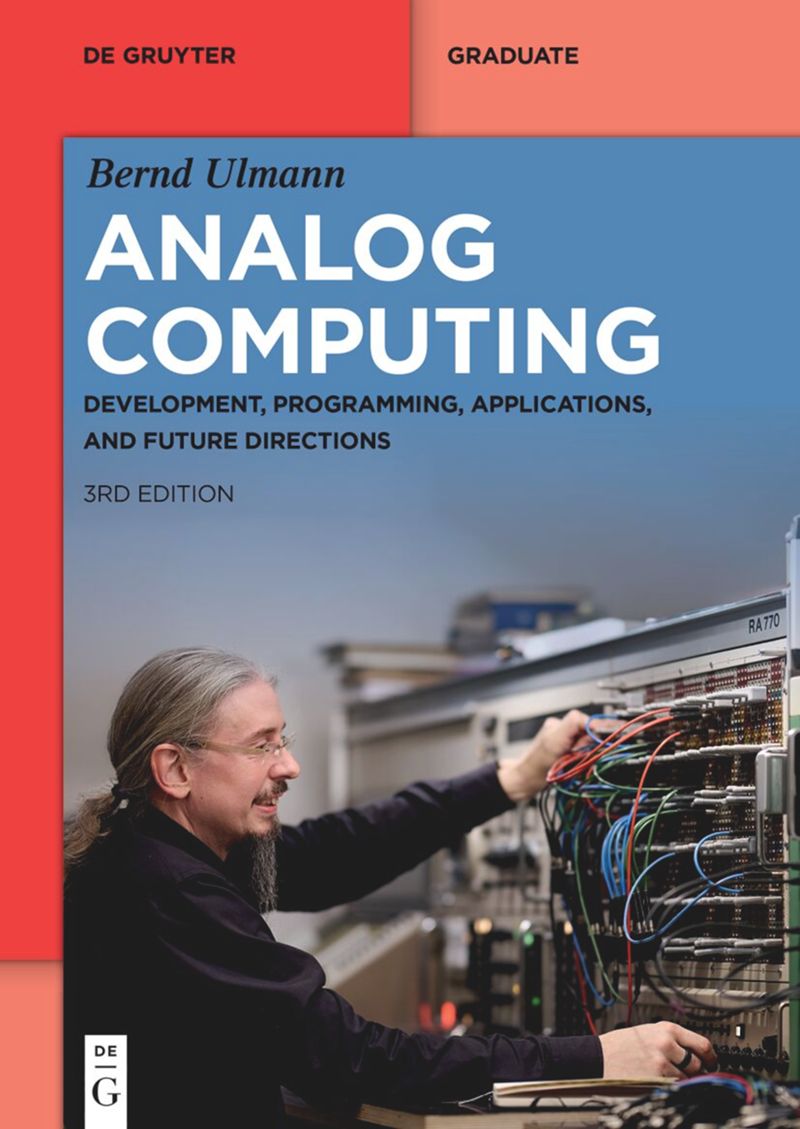
Analog and hybrid computing are two central pillars in the field of unconventional computing. Almost forgotten for decades, interest in these technologies is rapidly rising as they offer a viable path to high-speed and highly energy-efficient computing for the 21st century for a variety of applications ranging from high performance computing, edge computing, medical applications, etc., to artificial intelligence. Their high speed and high energy efficiency are of utmost importance in a time where vast amounts of electric energy are consumed by classic digital computers especially in the ever growing field of artificial intelligence and large language models. The book "Analog Computing" has established itself over the past decade as the standard textbook on the subject as refl ected in this third edition, which has been substantially extended over the previous editions. The bibliography alone has been expanded to well over 1000 entries making it a resource in itself for research and learning. The book covers the history of analog computers from the Antikythera mechanism to recent developments of reconfi gurable systems. It also includes a wide variety of worked examples showing basic programming techniques for analog computers. In addition to this, reconfigurable analog and hybrid computers as well as digital differential analyzers are also discussed in detail. A large portion is devoted to the discussion of classic and current analog and hybrid computer applications. The last chapter gives an outlook into the highly promising future of these fascinating machines. |
| ||
|
|
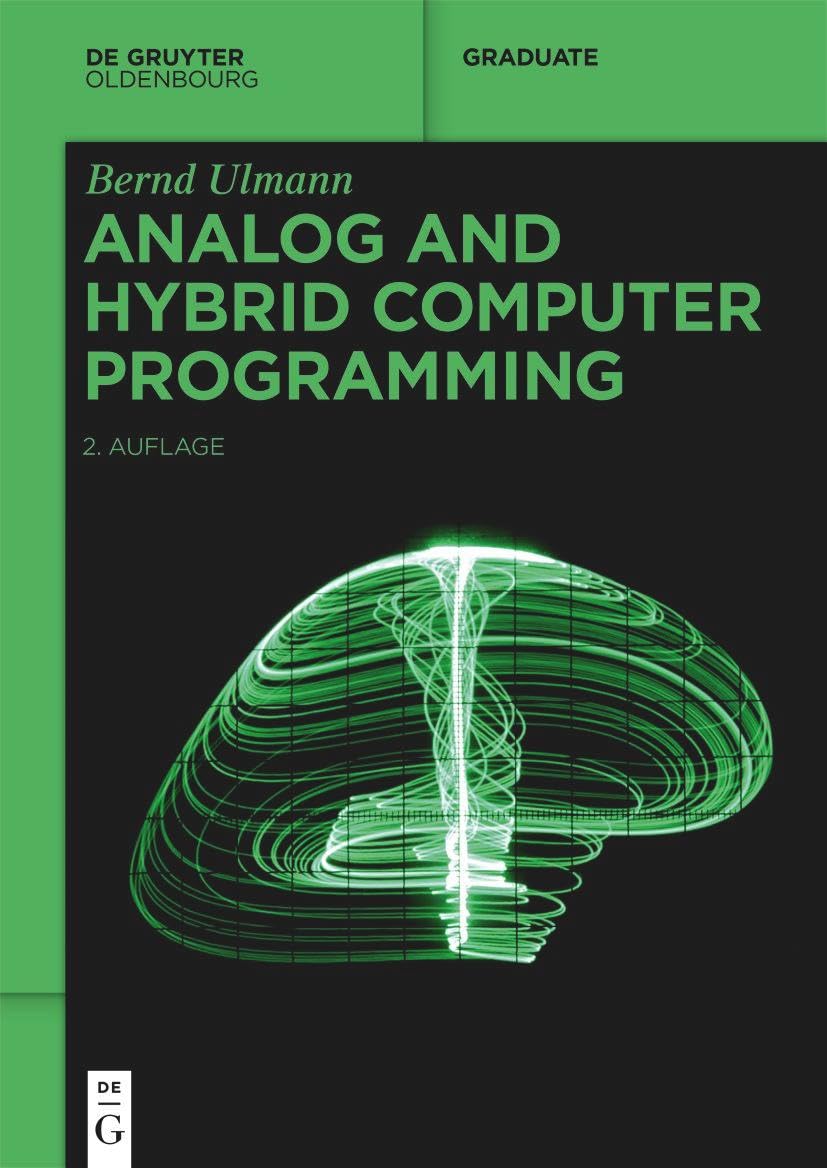
Analog and hybrid computing recently have gained much interest as analog computers can outperform classical stored-program digital computers in some areas by orders of magnitude. This book gives a thorough introduction to analog and hybrid computer programming by means numerous worked examples from various areas. It is based on a number of introductory and advanced lectures on this topic delivered by the author at several universities. |
| ||
|
Application NotesThe following section contains links to analog computer application notes (humorously known as "alpacas" in-house) which describe practical applications of analog computers such as the implementation of chaotic attractors etc. This section will get extended at irregular intervals so check from time to time for new publications. |
||
|
|
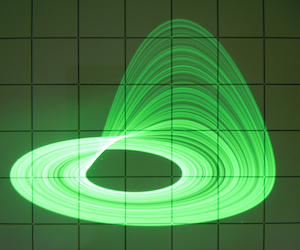
This is the first article in the series "Analog Computer Applications" by Analog Paradigm. This issue covers the so-called Rössler-attractor and its implementation on an analog computer in detail. Happy analog computing! |
|
|
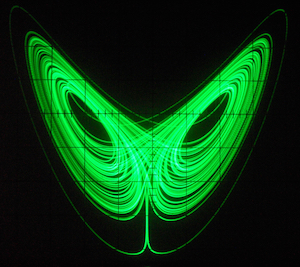
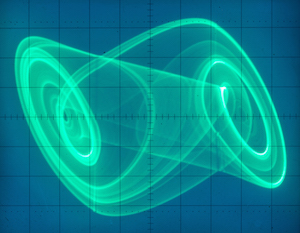
This second issue of "Analog Computer Applications" deals with the well-known Lorenz attractor. Happy analog computing! |
|
|
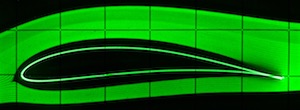
This third issue of "Analog Computer Applications" describes the basics and implementation of a so-called Chua-oscillator. |
|
|
The fourth issue of "Analog Computer Applications" deals with conformal mappings and the simulation of airflow around cylinders and Joukowsky airfoils. |
|
|
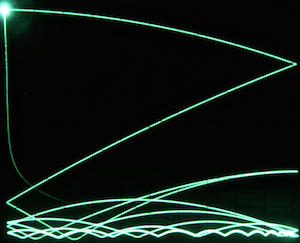
The fifth issue of "Analog Computer Applications" describes a high-speed simulation of a bouncing ball. |

|
|
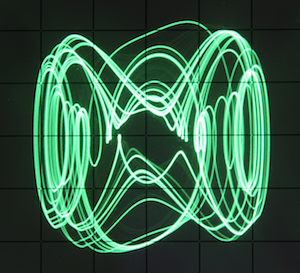
"Zombie Apocalypse Now" - simulate a world infested by zombies with an analog computer. |
|
|
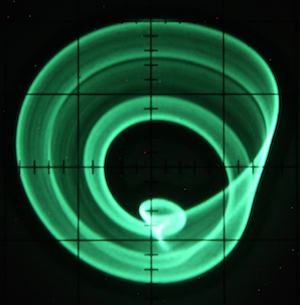
Simulation of a damped pendulum with an external forcing function yielding chaotic behavior. |
|
|
Nonlinear chaos based on an absolute value function. |
|
|
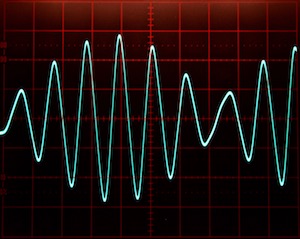
Computation of a ballistic trajectory with velocity dependent drag. |
|
|
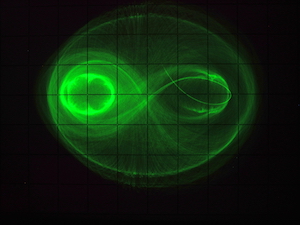
Application note #10 deals with Mathieu's differential equation. |
|
|
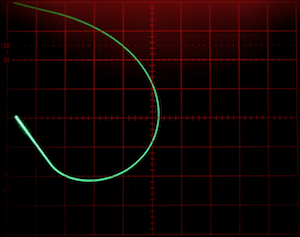
Application note #11 describes the implementation of a classic three-body problem on an analog computer. The trajectory of a satellite with infinitesimal mass crisscrossing between two fixed suns is computed. |
|
|
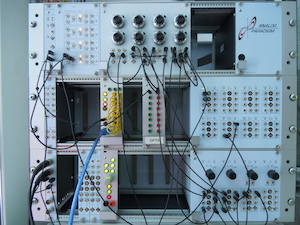
Application note #12 deals with the simulation of the path of a charged particle within a magnetic field. |
|
|
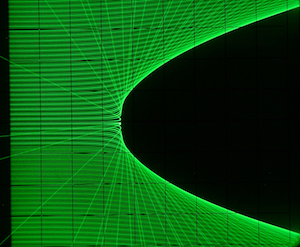
Application note #13 describes the optimization of the muzzle velocity of a shell using a prototype hybrid computer. |
|
|
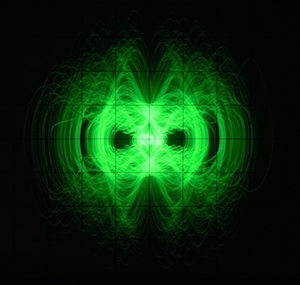
Application note #14 shows the simulation of Rutherford scattering, i.e. the scattering of Alpha-particles on the nuclei of a very thin gold foil. |
|
|
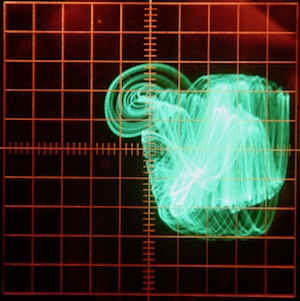
Application note #15 deals with two "elegant chaotic" systems. |
|
|
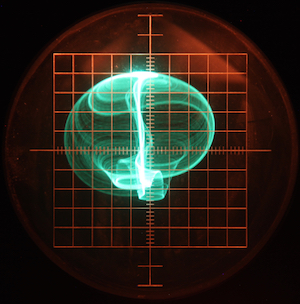
Application note #16 implements another, not too well-known chaotic attractor introduced be Edward N. Lorenz. |
|
|
Application note #17 - the Aizawa attractor, an exceptionally beautiful chaotic structure. |
|
|
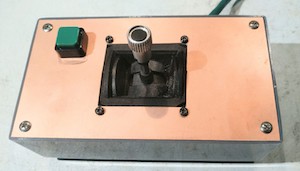
Application note #18 - a simple joystick adapter for analog computers. |
|
|
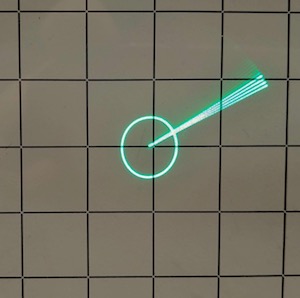
Application note #19 - a simple spacecraft simulation. |
|
|
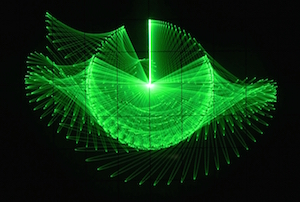
Application note #20 - simulating an (inverted) pendulum mounted on a moving cart. |
|
|
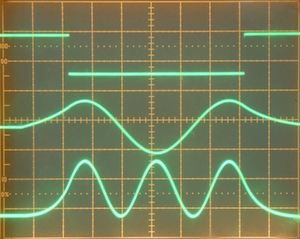
Application note #21 - simulating double pendulum. |
|
|
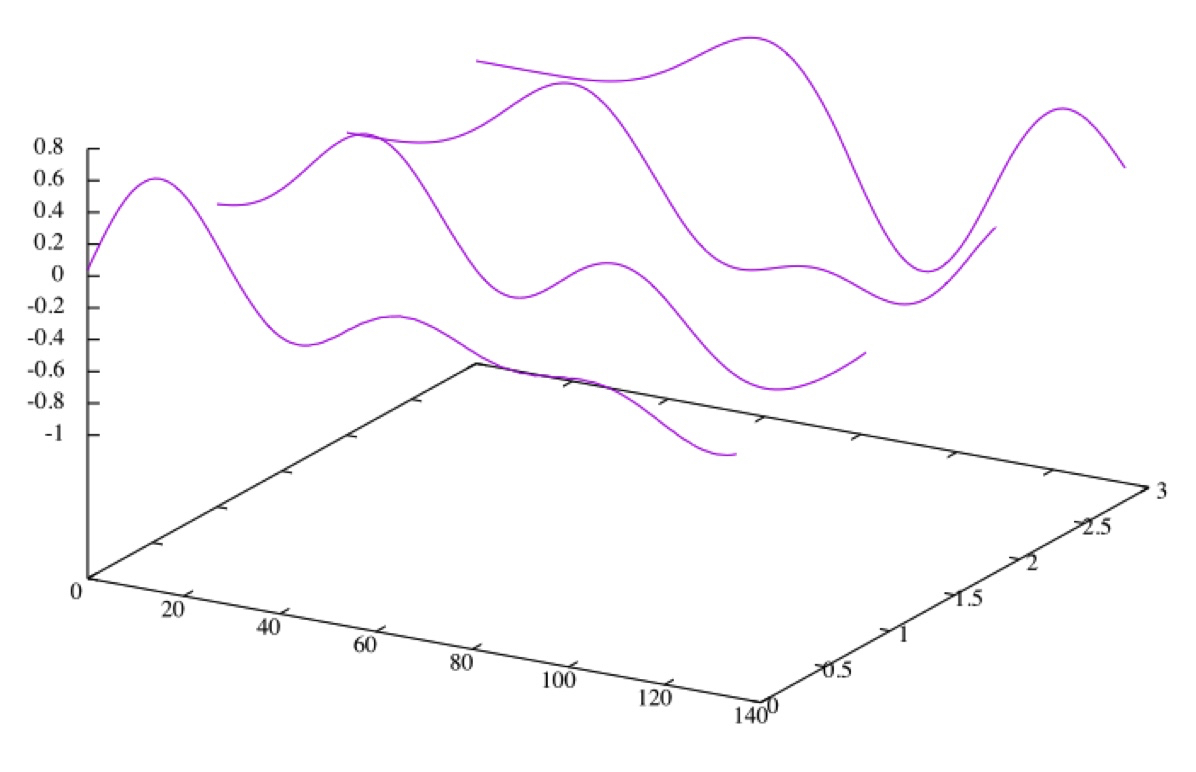
Application note #22 - solving the one-dimensional Schrödinger equation for a nonrelativistic particle. |
|
|
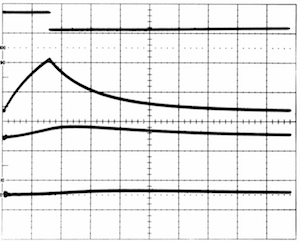
Application note #23 - treating a partial differential equation on an analog computer by discretizing space. |
|
|
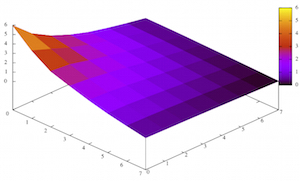
Application note #24 - solving the two-dimensional heat-equation on an analog computer. |
|
|
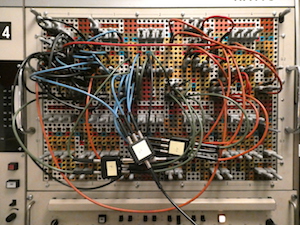
Application note #25 - A passive network for solving the two-dimensional heat equation |
|
|
Application note #26 - Simulating the flight path of a simple glider on an analog computer |
|
|
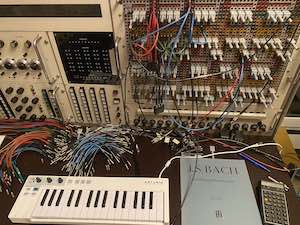
Application note #27 - Making music... |
|
|
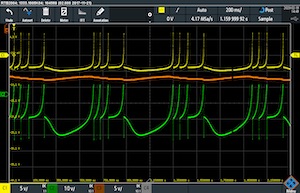
Application note #28 - implementing the Hindmarsh-Rose-model of neuronal bursting on an analog computer. |
|
|
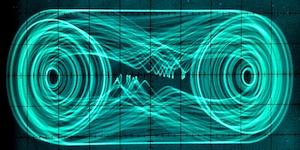
Application note #29: The Duffing oscillator. |
|
|
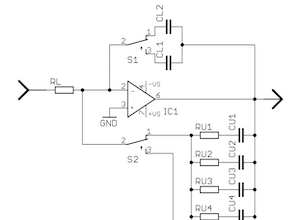
Application note #30 - this application note will be the first in a little series of articles culminating in the simulation of a nuclear power plant on an analog computer. This first part described the simulation of the neutron kinetics in a U235 or Pu239 reactor. |
|
|
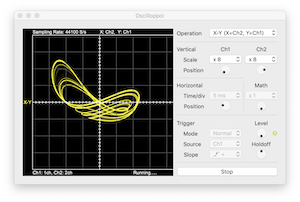
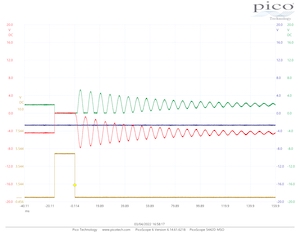
Application note #31 - this short application note describes a simple and pretty chaotic system and its implementation on THE ANALOG THING. |
|
|
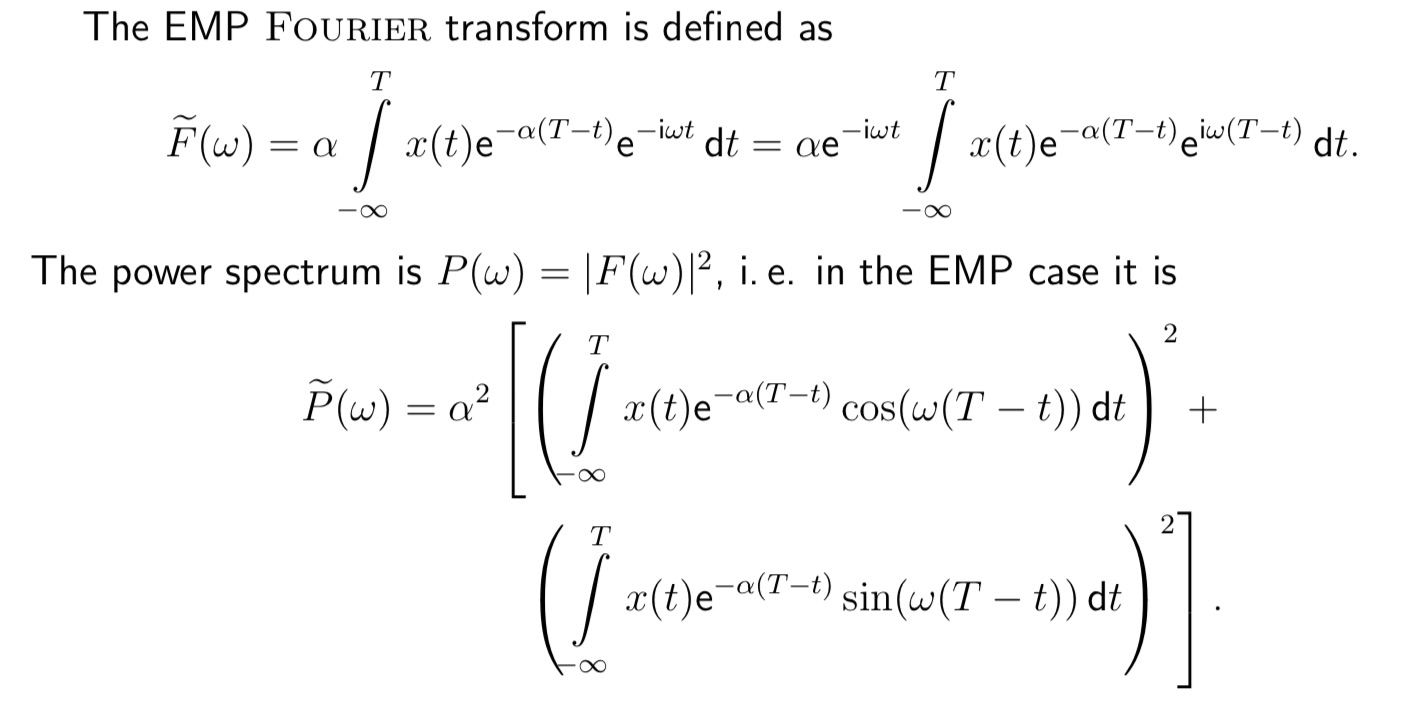
Application note #32 - this application note describes a rather clever trick for computing things like mean, variance, power spectrum etc. on an analog computer. |

|
|
Application note #33 shows how a clothoid (an Euler spiral) can be generated on THE ANALOG THING. |
|
|
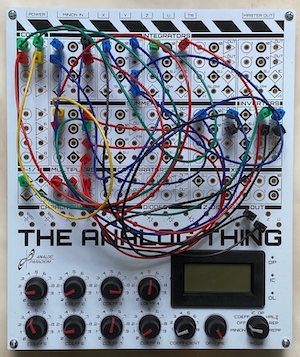
Application note #34 describes the simulation of bungee jumping with non-linear drag and a realistic bungee cord. It was written by Dr. Chris Giles and is aimed at THE ANALOG THING. |
|
|
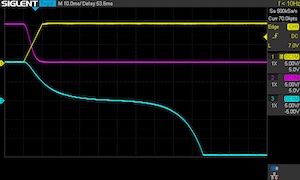
Application note #35 shows how to generate Bessel functions on THE ANALOG THING. |
|
|
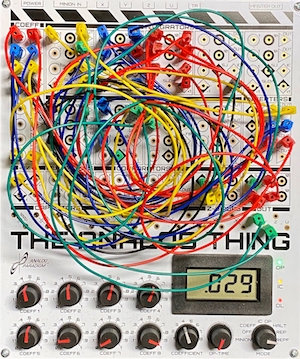
Application note #36 shows the solution of a quantum mechanical two-body problem with Gaussian potential. |
|
|
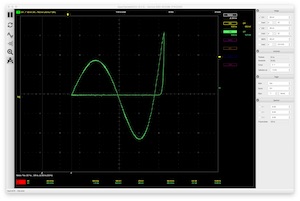
Application note #37 describes a simple polynomial display circuit using successive integrations to generate powers of x. |
|
|
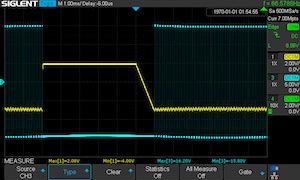
Application note #38 shows how Legendre's differential equation can be solved on an analog computer. |
|
|
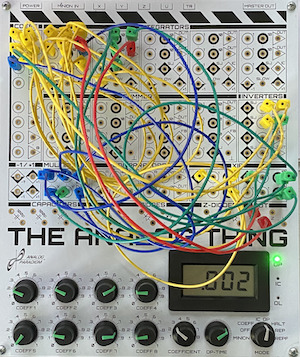
Application note #39 shows how to find roots of nonlinear equatios using an analog computer. |
|
|
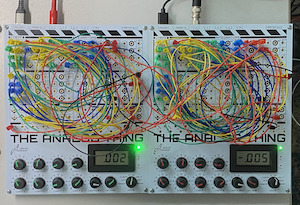
Application note #40 shows how to implement the Brusselator system on THE ANALOG THING. |
|
|
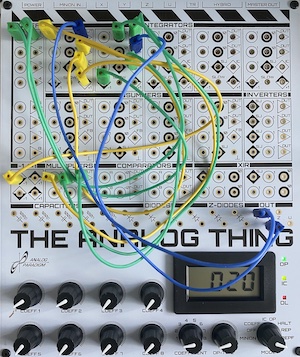
Application note #41 shows some experiments with Hindmarsh-Rose neurons with feedback. |
|
|
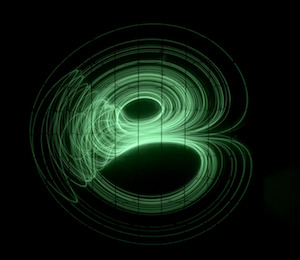
Application note #42: Generating a Gaussian function. |
|
|
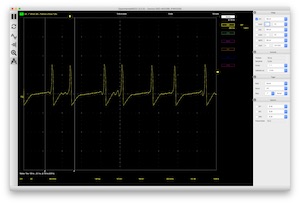
Application note #43: A simple chaotic Sprott system for THE ANALOG THING. |
|
|
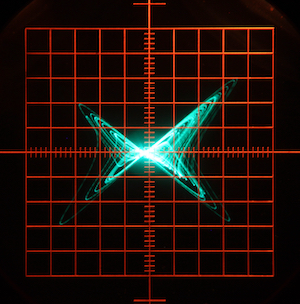
Application note #44: A three time scale system exhibiting interesting spiking behavior is described in this application note. |
|
|
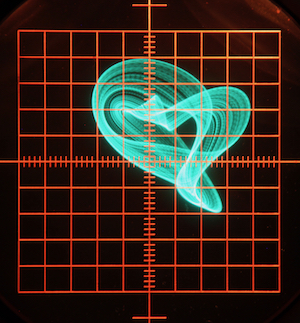
Application note #45: This application note describes the implementation of a beautiful four-wing attractor on an analog computer. It requires three integrators, three inverters, three multipliers, and seven coefficient potentiometers. |
|
|
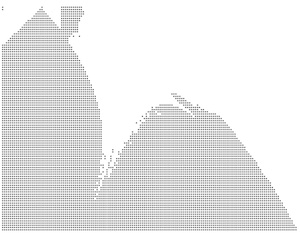
Application note #46: This application note describes the implementation of four "new" chaotic systems. |
|
|
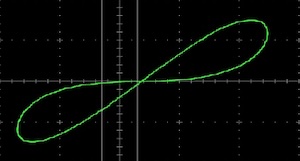
Application note #47: Mathieu's equation revisited -- generating a stability map using a hybrid computer |
|
|
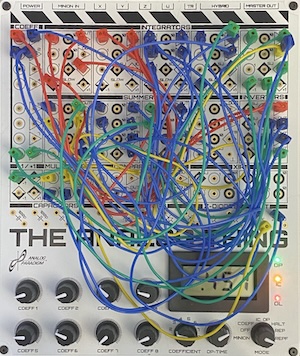
Application note #48: A simple memristor model |
|
|
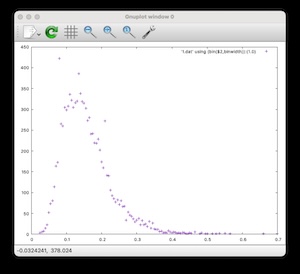
Application note #49: Fun with the sinc()-function |
|
|
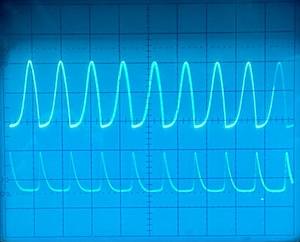
Application note #50: Solving stochastic differential equations on a hybrid computer |
|
|
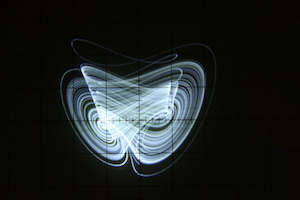
Application note #51: This application note was inspired by the Oregonator... |
|
|
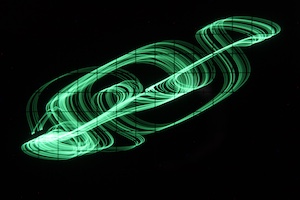
Application note #52: The Chen attractor on THE ANALOG THING. |
|
|
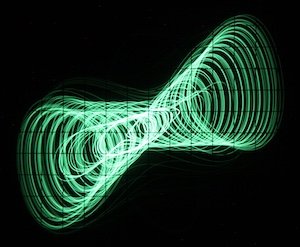
Application note #53: Two cyclically symmetric attractors due to Thomas (requires three THATs!). |
|
|
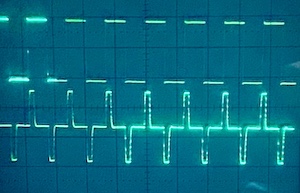
Application note #54: The chaotic Li system. |
|
|
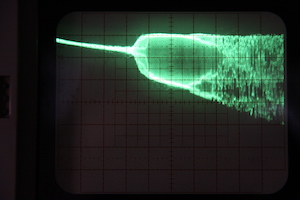
Application note #55: Computing time derivatives. |
|
|
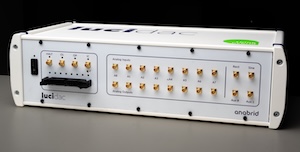
Application note #56: The logistic map. |
|
|
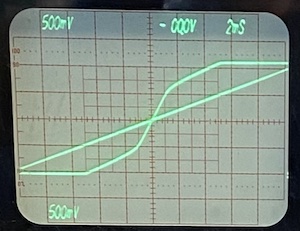
Application note #57: Two chaotic systems on the LUCIDAC. |
|
|
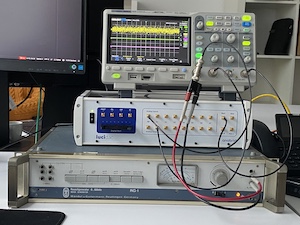
Application note #58: A (very) simple tanh(x)-approximation. |
|
|
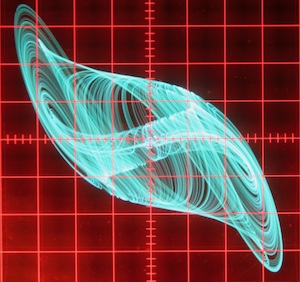
Application note #59: Stochastic DEQs on LUCIDAC. |
|
|
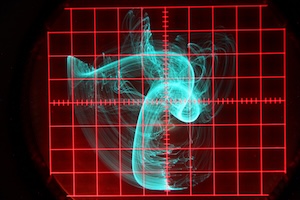
Application note #60: The Arneodo chaotic system. |
|
|
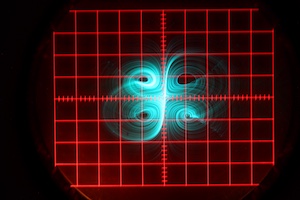
Application note #61: Exploring the Lorenz 96 system. |
|
|
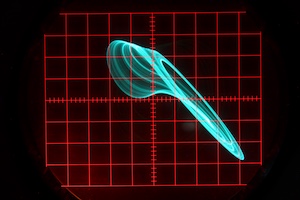
Application note #62: A 4D hyperchaotic system |
|
|
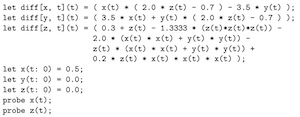
Application note #63: A chaotic jerk system with an absolute value function |
|
|
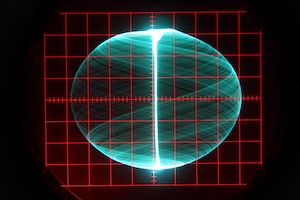
Application note #64: Implementing the Aizawa system on the REDAC. |
|
|
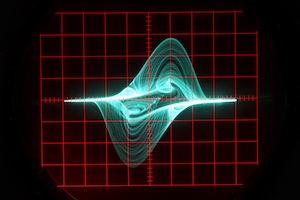
Application note #65: THAT on steroids - Aizawa again. |
|
|
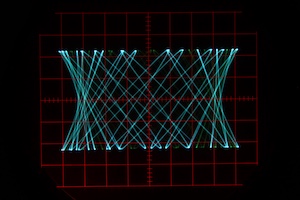
Application note #66: A velocity forced oscillator |
|
|
Application note #67: The minimal Hamiltonian exhibiting chaos |
|
Handbooks(These systems are no longer manufactured or sold.) |
||
|
|
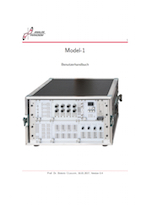
Here you can download the comprehensive manual for our Model-1 analog computer. This handbook covers the basic operation of the computer. |
|
|
|
Hier kann das Handbuch zum Analog Paradigm Model-1 Analogrechner heruntergeladen werden. Neben einer Beschreibung der einzelnen Rechenelemente enthält es auch eine Reihe praktischer Beispiele. |

|
|
Click on the picture to the left to download the handbook of our hybrid controller which allows coupling a digital computer with one of our analog computers to form a powerful hybrid computer. |